You finally get a clear Saturday, your house needs paint, and the forecast looks fine. Then a contractor tells you the surface is too cold to coat, or it warms up and the south wall is suddenly too hot. In Colorado, the weather window for a lasting paint job is narrower than most homeowners expect.
Getting the exterior paint temperature right is not just about comfort on the ladder. It decides whether the coating cures into a durable film or fails within a year along the Front Range.
This guide covers the temperature ranges different paints actually need, the role of humidity and dew point, why Colorado’s altitude and swings make timing harder, and what to do when conditions are not ideal.
Key Takeaways
- Latex paint performs best between 50°F and 85°F, with 60°F to 80°F as the sweet spot.
- Surface temperature must stay more than 5°F above the dew point to prevent moisture problems.
- Ideal conditions are 50°F to 80°F with humidity between 40% and 70%.
- Colorado’s large single-day temperature swings make overnight lows as important as daytime highs.
- Low-temperature paints work down to 35°F but demand careful attention to overnight temperatures.

Why Exterior Paint Temperature Matters More Than You Think
Paint is not just a protective coating. It is a chemical process that depends on the right conditions to cure, and exterior paint temperature is the variable most often gotten wrong.
It Is Chemistry, Not Convenience
When temperatures fall outside the acceptable range, the paint cannot form the strong bonds needed for long-term protection. Apply at 50°F or above, and do not let it drop below 32°F at night for several days after.
Even a warm afternoon fails if the overnight low is too cold, because the film never fully forms.
The Hidden Overnight Trap
As temperatures dip after sunset, dew forms on surfaces and the water in the paint evaporates too slowly. That is how a job that looked perfect at 4 PM peels by spring.
This is exactly why a forecast that only shows daytime highs is not enough to plan a Colorado paint job.
Ideal Temperature Ranges for Different Paint Types
Not every paint follows the same temperature rules, so the right window depends on what is in the can. Latex, oil-based, and modern low-temperature formulas each have their own safe range, and matching the product to the conditions is half the battle. Here is what each type needs to cure into a finish that actually lasts on a Colorado exterior.
Latex Paint Requirements
Latex paint is best applied between 50°F and 85°F, and it is the recommended choice for most exteriors. Most experts point to 60°F to 80°F as the sweet spot for results.
This water-based paint dominates the exterior market because it cleans up easily and is more environmentally friendly than oil-based options.
Oil-Based Paint Range
Oil-based paint tolerates a broader range, typically 40°F to 90°F. It offers strong durability but is less common for residential exteriors due to environmental regulations and harder cleanup.
For a fuller comparison of the two, see our guide on oil vs latex exterior paint.
Low-Temperature Exterior Paints
Modern formulas expand your options. Products like Sherwin-Williams Duration, Resilience, SuperPaint, and A-100 Exterior can be applied down to 35°F.
These still require careful attention to overnight temperatures and humidity, so they extend the season rather than removing the rules.
The Critical Role of Humidity and Dew Point
Temperature alone does not tell the whole story. The industry standard is to paint on a surface more than 5°F above the dew point, the temperature at which water begins to condense.
The Dew Point Buffer
A practical rule is to keep the dew point at least 10°F below the surface temperature. If you are painting a surface at 70°F, the dew point should not exceed 60°F to create a safe buffer against condensation.
Cross that line and moisture interferes with the paint’s ability to adhere and dry smoothly.
The Humidity Window
Keep relative humidity between 40% and 70%. When the air is too humid, drying slows down, which leads to sticky surfaces, blotches, or uneven finishes.
In Colorado’s typically dry climate this is less of a daily problem than cold overnight lows, but it still matters after spring and late-summer storms.
Colorado’s Unique Painting Challenges
Colorado homeowners face conditions that make generic painting advice inadequate. At altitude, there is less atmosphere filtering the sun, so paint fades faster here than at sea level.
Altitude and UV
Denver sits high enough that UV radiation runs roughly 25% stronger than at sea level. According to EPA guidance on UV exposure, UV intensity climbs about 4% for every 1,000 feet of elevation.
That UV does not just fade color; it breaks down the structure of the coating itself.
The Single-Day Swing
Front Range temperatures can run from the 70s to below freezing within the same day, especially in spring and fall. Your siding expands and contracts with every swing, stressing the film.
This is why the same week can offer a perfect painting afternoon and an overnight low that ruins it. Planning around both ends of the day is the job.
Timing Your Exterior Painting Project
Getting the exterior paint temperature right starts with picking the right time to paint. In Colorado, that means thinking about both the hour of the day and the season, since the Front Range can swing through the full safe range and back out of it within hours. The goal is simple: apply paint when the surface sits comfortably in range long enough to cure before the next cold or wet shift.
Best Times of Day
The best window is typically 10 AM to 3 PM, when temperatures are warm enough to dry the paint but not so hot it flash-dries. This window also leaves enough time for the paint to set before evening dew arrives.
Many pros start on the shady side and follow the shade around the house, working early morning and late afternoon during hot summer stretches.
Seasonal Considerations
Spring and fall offer moderate temperatures and lower humidity that tend to stay in the ideal range for most paints. They are the safest windows for getting exterior paint temperature right.
In Colorado, summer is the most popular season in the Denver area thanks to long, dry, sunny days, though summer heat brings its own scheduling challenges. Good prep matters in every season, which is why understanding why paint primer matters first pays off before the topcoat goes on.
Surface Temperature vs. Air Temperature
One of the most common mistakes is confusing air temperature with surface temperature. The surface has its own temperature, which can differ sharply from the air around it.
The Hand Test
A dark wall in direct sun for a few hours can be substantially hotter than the air. If you cannot hold your palm flat on the wall for more than a few seconds, it is too hot to paint.
That simple test catches problems a weather app never will.
Why Dark Walls Run Hot
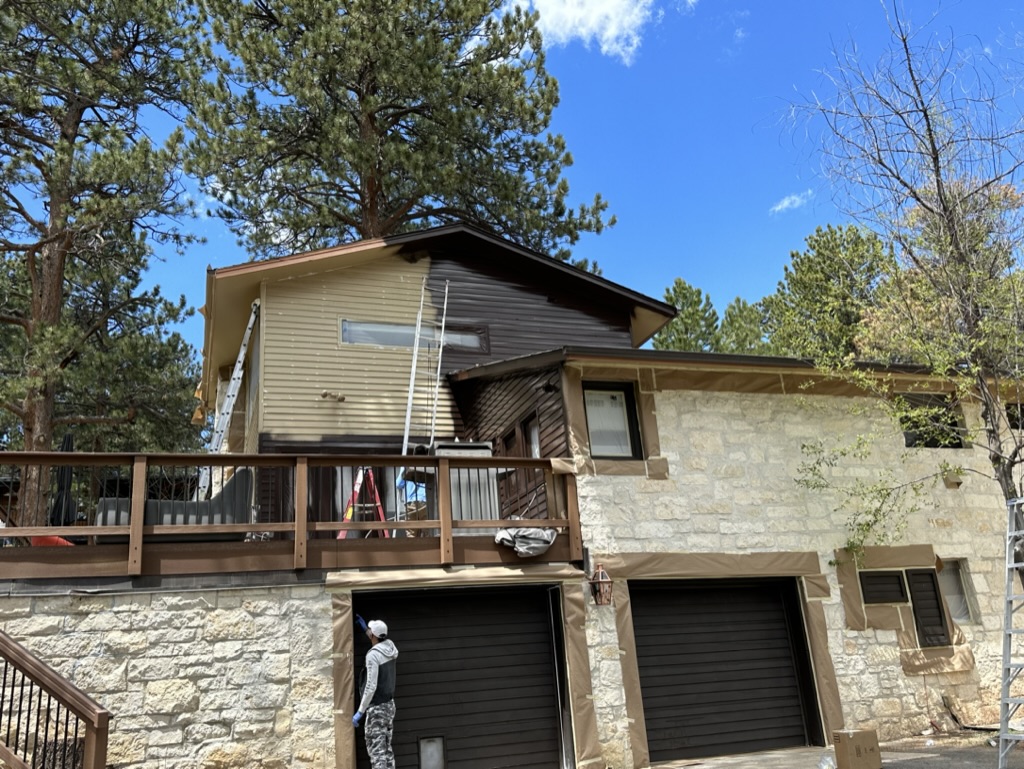
Dark-colored surfaces absorb more heat than light ones. A dark wall can run 20°F to 30°F warmer than the surrounding air.
Color choice and sun exposure both shift the real surface temperature, which is the number that actually governs how the paint behaves. For finishes built to survive that exposure, see our guide on the longest-lasting exterior door paint finish.
When Conditions Are Not Perfect
You will not always get a textbook day. Here is how the pros adapt at both ends of the range.
Cold Weather Solutions
If you must paint in cooler conditions, specialized paints like Sherwin-Williams Latitude allow surface temperatures as low as 35°F. Even these require the surface to stay at or above 35°F for 24 hours after application.
Drop below that and the paint may not dry properly, leading to adhesion issues, cracking, or premature failure.
Hot Weather Strategies
When it climbs above 85°F to 90°F, shift to prep work instead of coating, or paint small sections with breaks. Keep the paint itself cool by not leaving buckets sitting in direct sun.
Following the shade and working the cooler hours keeps the surface in range even on a hot Front Range afternoon.
Professional vs. DIY Considerations
Local painters bring experience with Denver’s high-altitude climate and the techniques that make paint last in it.
Prep Is Most of the Work
Proper preparation represents roughly 40% to 60% of labor on a quality painting project. That prep is what makes a finish survive Colorado’s UV and temperature swings, and it is the first thing cut on a cheap bid.
The product on the wall matters less than the preparation underneath it.
Local Climate Knowledge
Our team at Mountain West Painting has worked across Colorado’s Front Range and knows which paint systems perform at altitude. We monitor conditions closely and time applications around both the daytime high and the overnight low.
For homeowners weighing the investment, our breakdown of what affects exterior painting cost explains where the money goes, and our guide to sustainable painting practices for longevity covers products that hold up longer.
What to Do When the Weather Does Not Cooperate
Sometimes the forecast changes mid-project. Knowing how to respond protects the work you have already done.
If Rain Surprises You
Stop painting immediately and wait until the rain stops and the surface is fully dry. Standard exterior latex needs at least 4 hours to dry before it can withstand rain, so plan for no rain for 24 hours after you finish.
A heavy downpour on a not-fully-cured coat risks wash-off and spotting that means redoing the work.
The Payoff of Patience
When you wait for the right conditions and use products suited to Colorado’s climate, your paint job becomes a long-term investment instead of a recurring headache.
The weather challenges along the Front Range are real but manageable with the right timing and materials. Whether you want help reading the window for your specific home, an honest assessment of whether now is the time to paint, or a full professional job that accounts for altitude, UV, and overnight lows, our team at Mountain West Painting will walk you through exactly what your home needs.
Call 720-520-5505 for a FREE estimate today.